
THE LAB
What Electric Boat Fabrication Actually Involves
Electric boat fabrication is not welding a hull and dropping a battery in it. The hull is the easy half. The hard half is everything the water is trying to get into: an 850-volt architecture sealed to IP68, a pack that can sustain high discharge without cooking itself inside that seal, connectors and penetrations that survive thermal cycling and river impact, and a control system that ties the throttle, the drive modes and the instrumentation into something that feels like one machine. Each of those is a development problem with no off-the-shelf marine answer, which is exactly why the Lab exists.
We build, test, break and rebuild in the same room. A pack enclosure goes from CAD to a welded prototype to the immersion tank in days rather than months, and when it leaks we know why by the afternoon. That loop — build it, drown it, fix it — is worth more than any amount of simulation, and it is the reason a first-of-its-kind boat is achievable by a small shop in northern Alberta.
Test Everything, Assume Nothing
Trails Edge wrote its own IP68 enclosure validation procedure, aligned to IEC 60529, because the marine industry does not have a standard one for a high-voltage pack in a shallow-water jet boat. Every enclosure gets submerged. Every connector gets cycled. Every claim on a spec sheet has to survive somebody trying to disprove it in the shop first, because the alternative is discovering the problem on a customer’s boat on the Wapiti in October.
Open on Purpose
The Lab is designed to be visible from the showroom floor through a glass wall. That is a deliberate choice and a slightly uncomfortable one — it means customers watch us work, including on the days it is not going well. We think it is the right trade. Nobody spends six figures on a boat from a company they cannot see inside, and wiring done properly is worth looking at.
Beyond Electric Boat Fabrication
The same bench that develops a marine pack develops everything else we decide is worth building. High-voltage service for the powersports side of the business, charging infrastructure for the compound, fabrication for one-off customer requests, and whatever the next good idea turns out to be. The Lab is the part of Trails Edge that is not a boat company — it is the reason there will be a second product, and a third.
Our electrical work follows ABYC E-11 and TE-4, our enclosure testing follows the ingress-protection ratings defined in IEC 60529, and every finished vessel is built to Transport Canada Small Vessel Regulations.
What Happens in the Lab
High-Voltage Systems
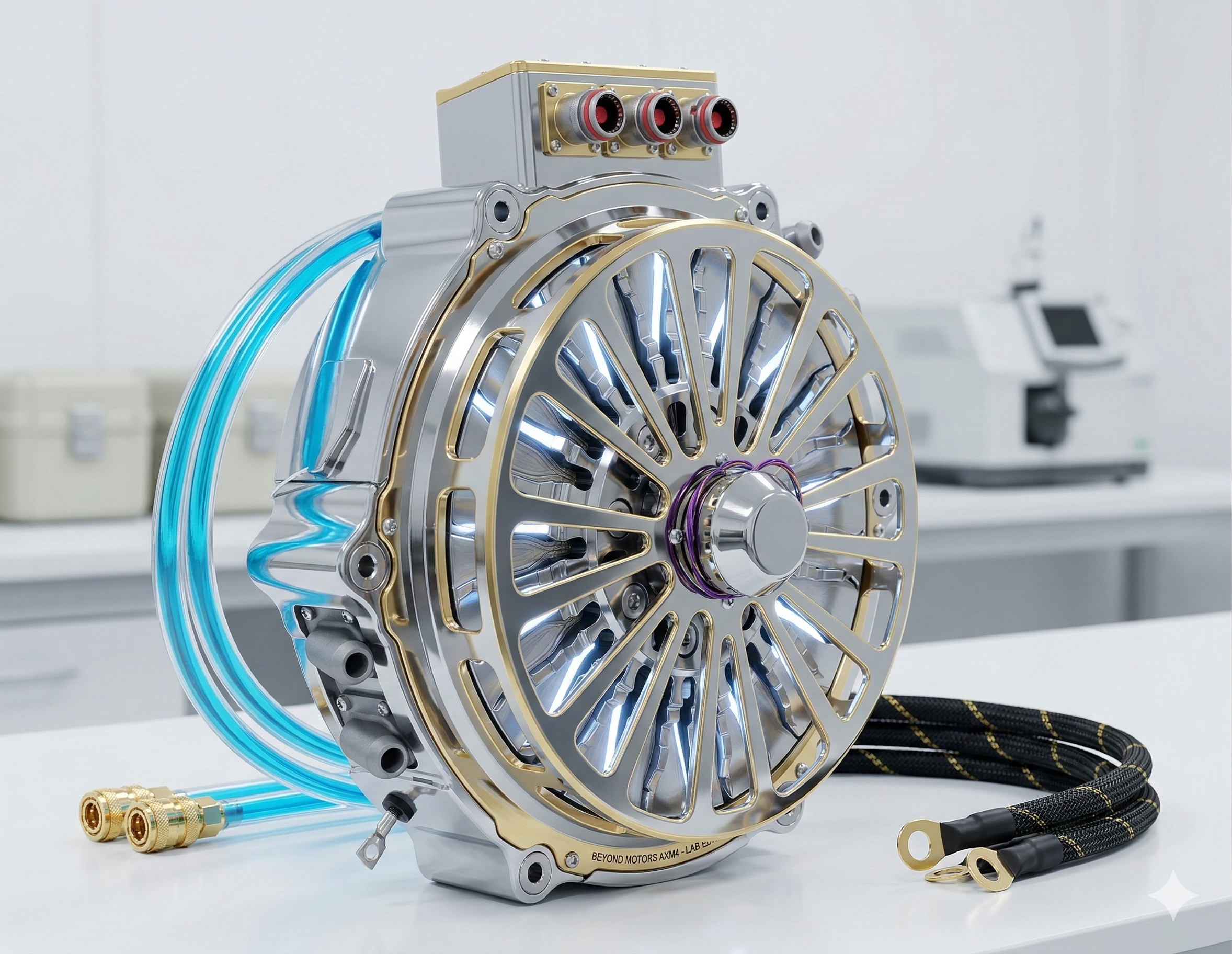
850V architecture, battery management systems, custom shielded harnesses, and thermal management — designed and integrated in-house by a Red Seal Electrician with 25+ years in HV systems.
IP68 Waterproofing & Testing
Proprietary in-house immersion testing to IEC 60529 / CSA C22.2 standards — calibrated instruments, documented test logs, and enclosures proven watertight before they ever see the river.
Fabrication & Prototyping
Aluminum fabrication, fitout, and rapid prototyping with our Alberta partner network. If we think it’s a good idea, we build it — that’s the whole point of the Lab.
Compliance & Documentation
Transport Canada Small Vessel Regulations, ABYC E-11 / TE-4 electrical standards, engineering review, and full build documentation on every boat.
THE BIGGER PICTURE
The Compound
Walk in small. Walk out amazed.
The Lab lives inside a bigger idea: 150+ acres southwest of Grande Prairie on the Hwy 43X corridor. You’ll arrive at a small rustic cabin — the coffee will be on. What happens next, we’re keeping for your first visit. Beyond it: a showroom with the full Trails Edge lineup, and behind a glass wall, The Lab itself — because the wiring is the show.
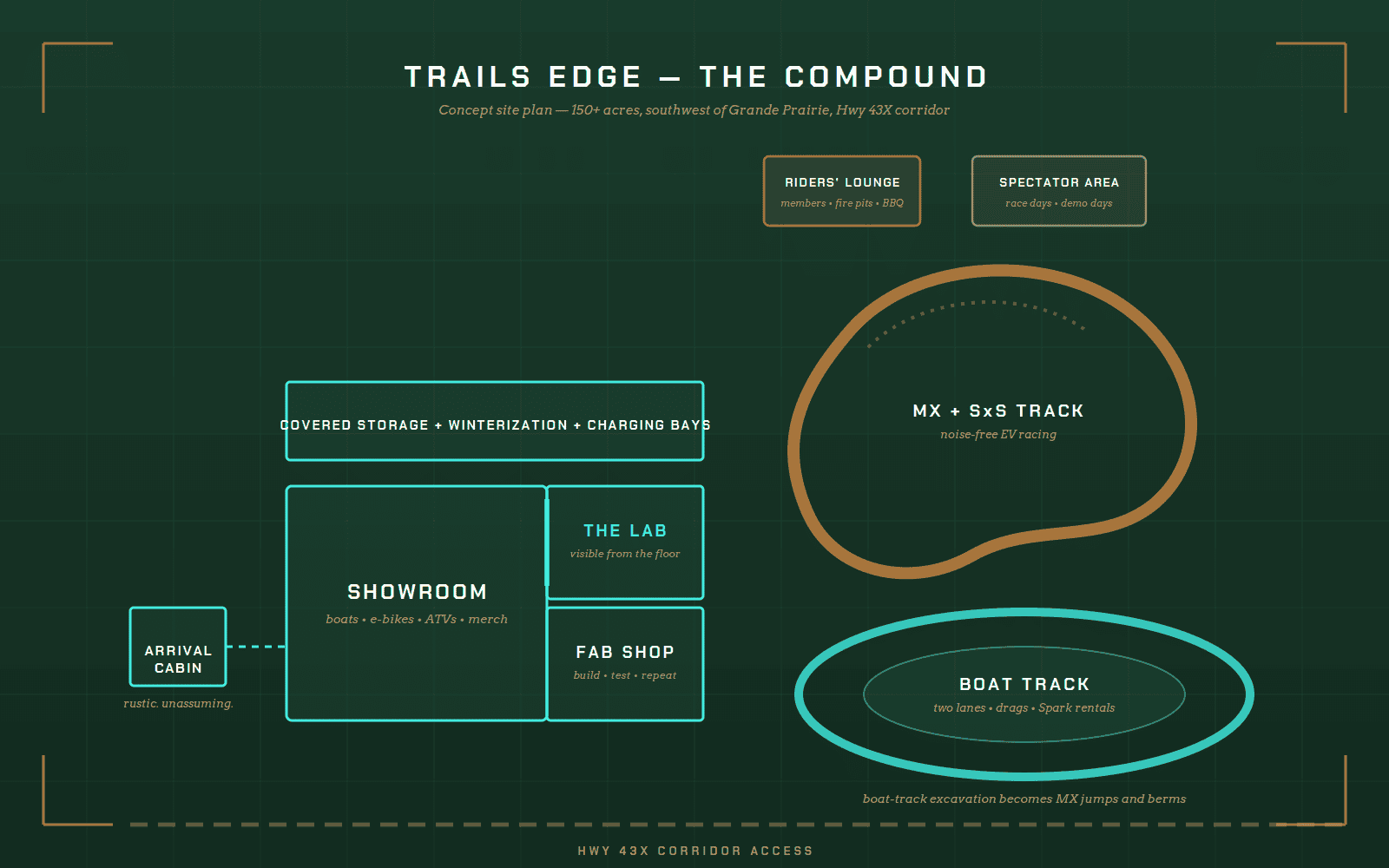
Inside The Lab: museum-clean floors, a Phantom hull on stands with its 90 kWh pack opened above it, the IP68 immersion tank where every production enclosure earns its rating, and a fabrication shop behind the wall doing the heavy building. Outside: a full motocross and SxS track running silent electric race days, a two-lane boat track for drags and Phantom Spark rentals, covered storage with winterization and charging bays, and a members’ riders lounge with fire pits going.
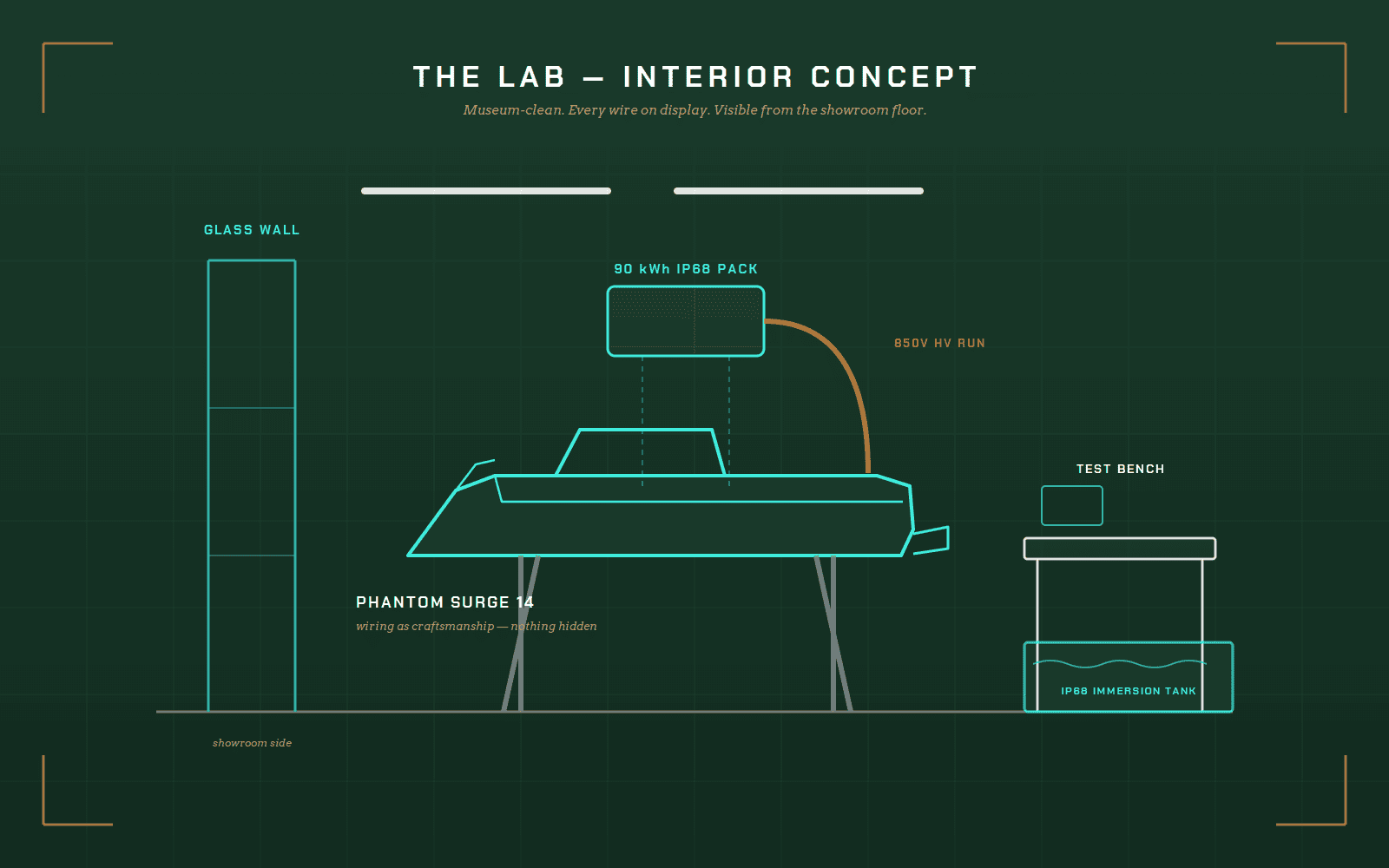
Concept plans — land search underway. Want to influence what gets built? Get in touch.
Built With the Best
An Alberta Partner Network
The Lab pairs in-house engineering with proven specialists: Minijet Inc. and Outlaw Eagle Manufacturing hulls, Jet Craft Marine drive fitout in Grande Prairie, and CSA Group in Calgary on the certification pathway. Every electrical system is reviewed by a certified engineering firm.
Next chapter: a purpose-built shop and showroom on the Trails Edge compound — with the Lab at its core.